How vCISOs and MSSPs can run compliance for many clients without adding headcount
A vCISO practice grows by adding clients, and the compliance work grows with it. Here is how practices stay in control of ten or fifty clients, and where a Compliance & Audit OS fits.
Key takeaways
- The cost of a growing practice is the same work, repeated in different formats for each client.
- Five habits scale: a standard engagement shape, one place per client, a book-wide view, recurring work that reopens itself, and reports from live data.
- AI should draft and point out gaps. The practitioner decides what goes to the client.
A vCISO or MSSP practice usually hits the same wall. The first few clients are managed well, because the founder knows every detail. By the tenth client, the work lives in a different spreadsheet for each one, the reports take a weekend to build, and a new client means a new person.
The problem is not the quality of the advice. It is the cost of running the same work again and again in different formats.
What multiplies as you add clients
| What grows | Why it grows | The habit that contains it |
|---|---|---|
| Frameworks | One client wants ISO 27001, another SOC 2, a third an RBI or CERT-IN requirement | One standard engagement shape |
| Recurring tasks | Policy reviews, access reviews, vendor assessments and drills repeat on different dates | Recurring work that reopens itself |
| Evidence | Each client has its own folders, naming and gaps | One place for each client's work |
| Reporting | Each client expects a monthly view, some a Board-ready one | Reports built from live data |
Five habits that scale
- 1A standard engagement shape. The same stages for every client: assess, identify gaps, implement controls, monitor, report. Differences sit in the content, not in the process.
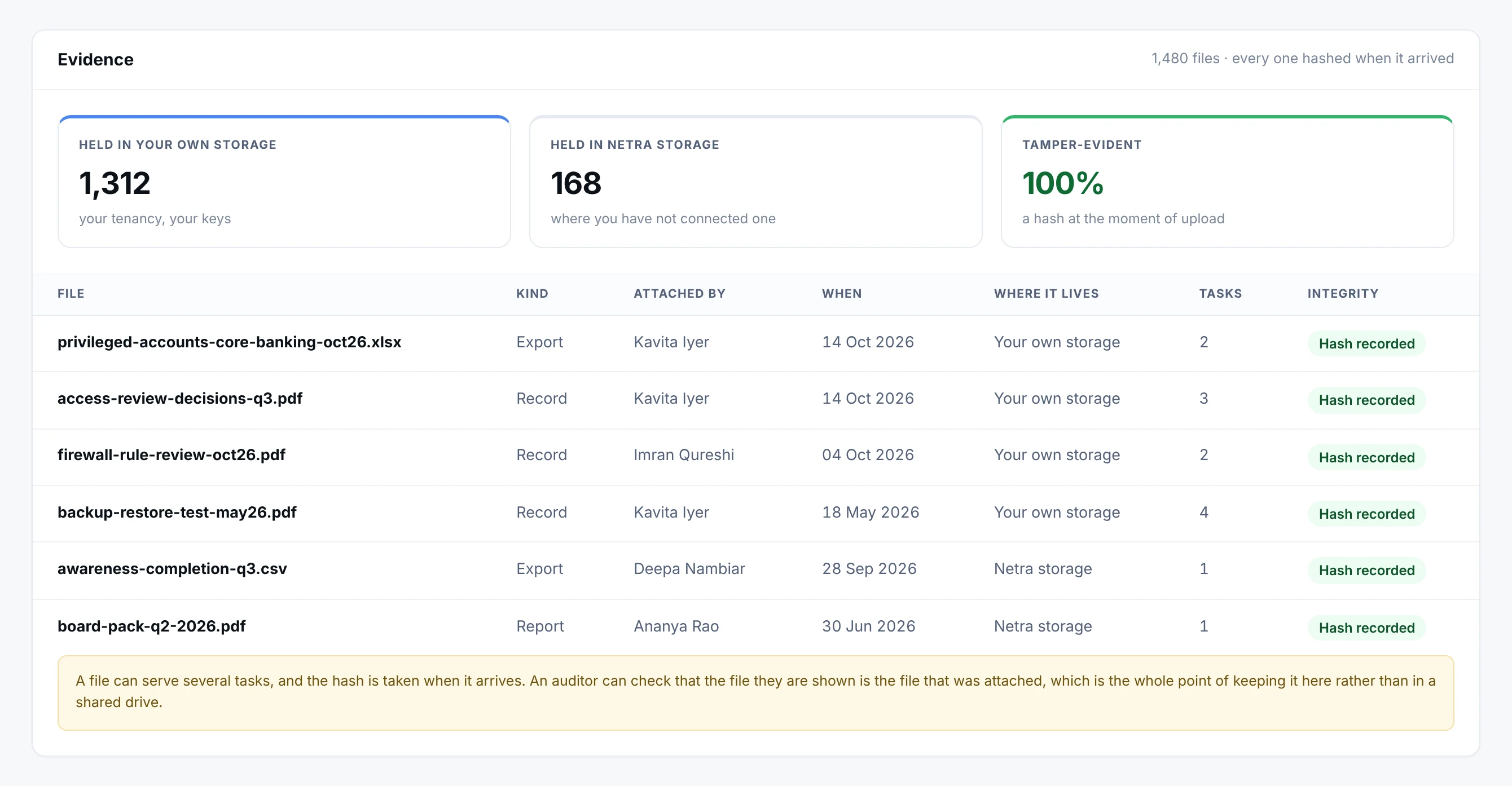
- 2One place for each client's work. Tasks, policies, risks, evidence and audits per client, kept apart from the others, but visible together to you.
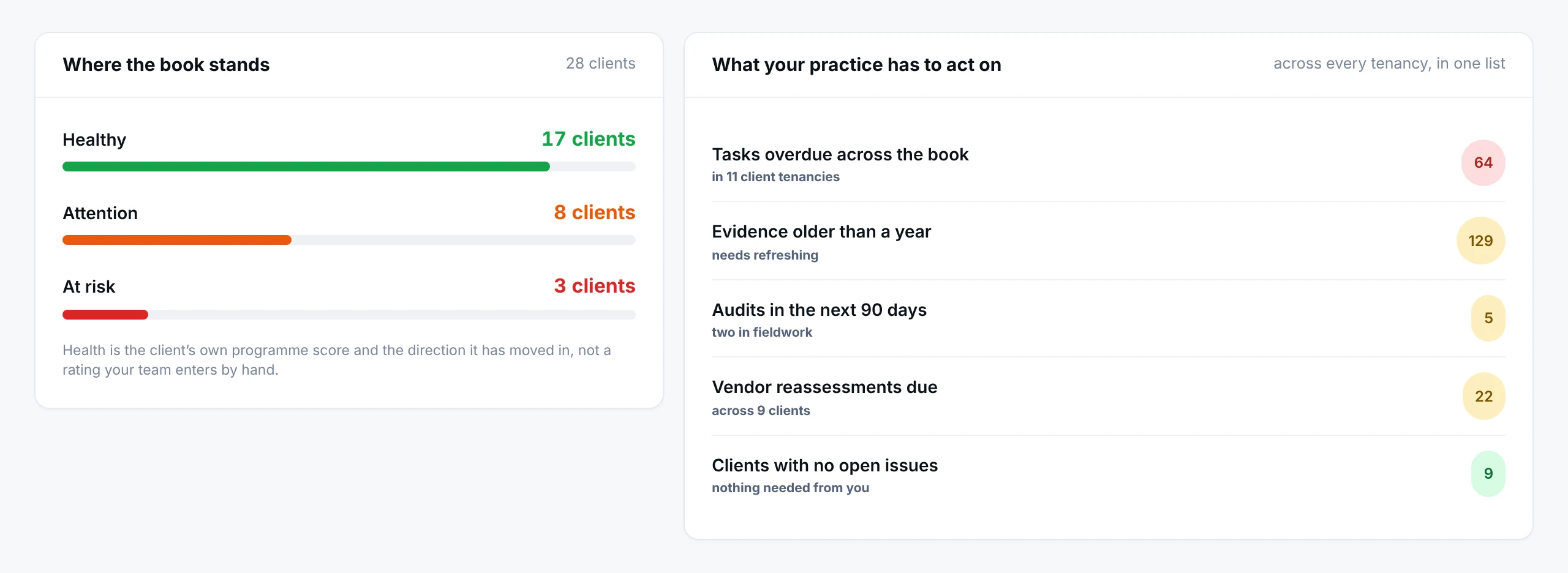
- 3A priority view across the book. Which clients are slipping, which have an audit coming, which have open gaps. You should not have to open ten workspaces to find out.
- 4Recurring work that reopens by itself. If a review is due every quarter, the system should raise it, not your calendar.
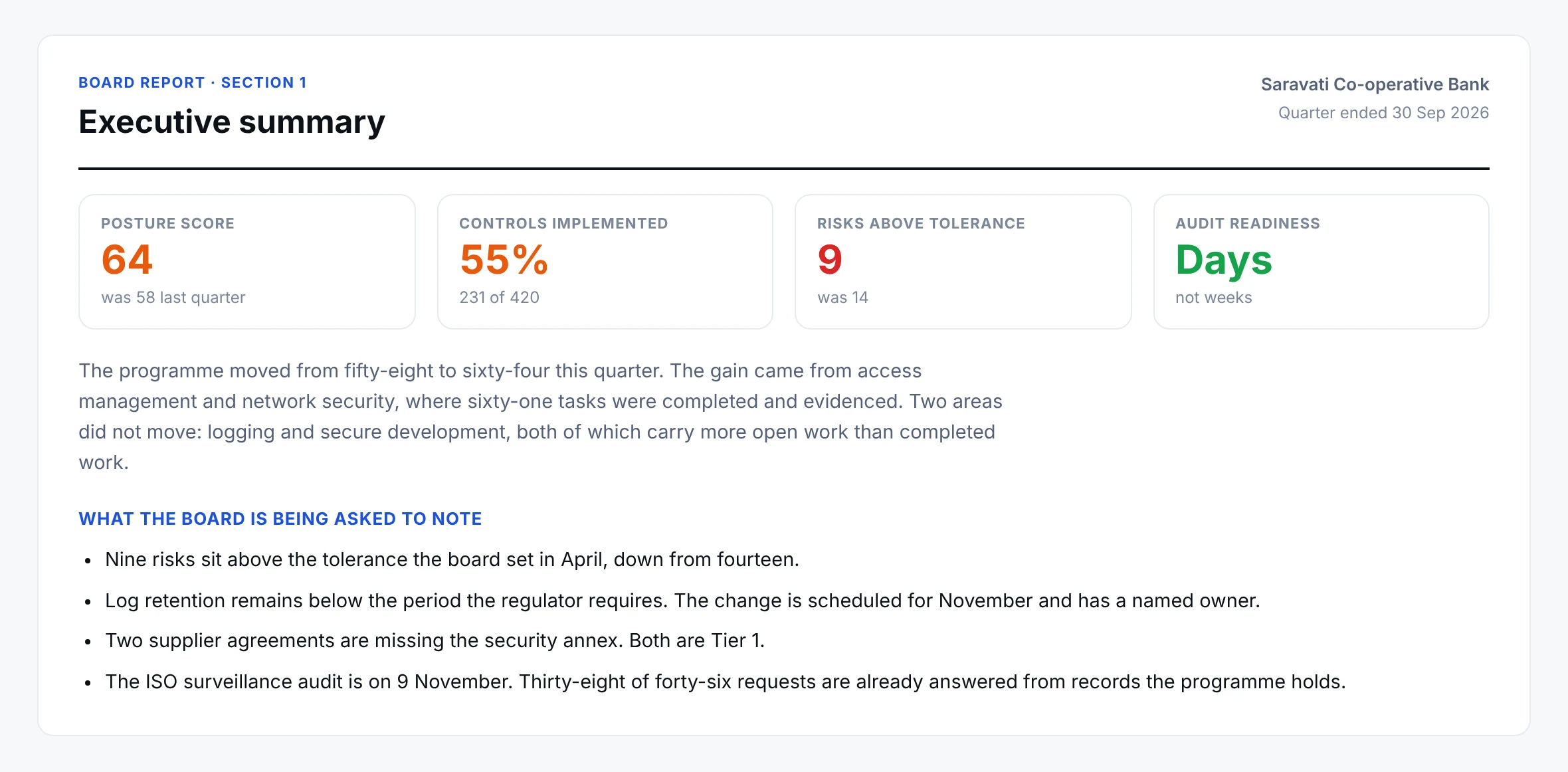
- 5Reports built from live data. A report assembled from what was actually done is faster to produce and easier to defend than one typed from memory.
Where AI helps, and where it should not
AI can read a client's own frameworks, tasks and records, point out what is missing and draft something for review. The decision stays with the practitioner.
Note. A co-pilot, not an autopilot. It speeds up the draft, and you remain accountable for what goes to the client.
Where Netra fits
Netra is a Managed Compliance and Audit OS for practices like this. One platform serves your direct clients and your managed ones, and the Partner Portal gives you a view across all of them. Control status is derived from completed work and evidence, so a client report reflects what has actually been done. Do the work once; satisfy everything it touches.
You can read more on the Solutions for MSSPs and Audit Firms page, or the vCISO role page.
A five-minute test for your practice
Pick a client at random and tick what you could show in five minutes.
If you could not tick them all, that is the part to fix first.
Frequently asked questions
Why does compliance work grow with every new client?
Because the same work is repeated in a different format for each client.
What helps a vCISO practice scale?
Five habits: a standard engagement shape, one place per client, a book-wide view, recurring work that reopens itself, and reports from live data.
What is the right role for AI?
AI should draft and point out gaps. The practitioner decides what goes to the client.
One platform for direct and managed clients
See the Partner Portal and how practices run many clients from one place.
See it in Netra
A demo on the frameworks that matter to you.